

Code Vein 2 is right around the corner, and it’s poised to deliver both a mechanical evolution and a narrative reset for the anime RPG. Bandai Namco’s latest keeps the fundamentals that made its predecessor a cult favorite, and transports them into a completely new world and story. Ahead of its release, I sat down with Code Vein 2 producer Keita Iizuka to discuss the new game’s approach, why the developer is staying clear of gen-AI tools, and placing a greater focus on up-front story and characters, rather than leaning purely on the challenge of combat.
Iizuka tells me (via a Bandai Namco translator) that the Code Vein 2 team “really wanted to create something that was even more dramatic than the last Code Vein, as well as intensifying the action sequences.” From the few hours I spent with it, I’d say it definitely achieves that; the sequel feels fairly familiar to my memories of the original, but with an increase to the sense of scale and the pace of combat. With wider build diversity and more weapon types, Iizuka hopes it’ll appeal to “really accomplished Code Vein players as well as somebody who is new [to the series].”
Iizuka estimates that the main story length is “about the same as Code Vein 1, perhaps a little bit longer,” but that the world of the new game feels bigger, which resonates with my experience in the main dungeon I was able to explore. It all feels slightly more like a real, complete world, where many sections of the original came across as videogame levels, albeit ones with some beautiful set dressing around the edge. Sadly, there’s no option for co-op play this time, but the extensive companion system makes up for that as a single-player experience.
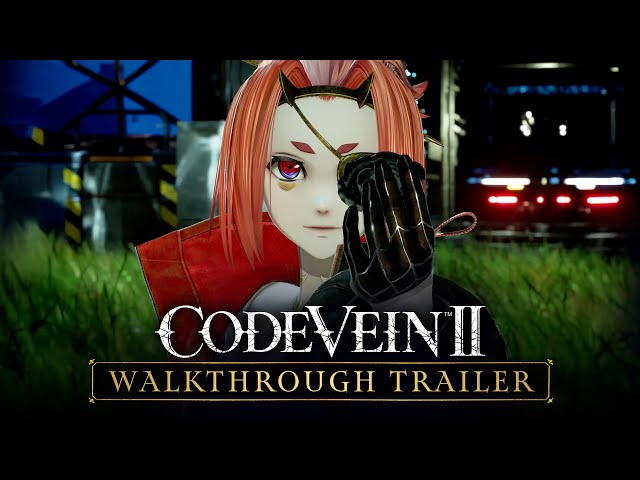
One term that comes up a lot during the preview event is ‘soulslike,’ and it’s a term you’ll hear many use to describe Code Vein 2 – even me, I’m doing it right now. Like many other genres, it’s broadened somewhat beyond its original definition, although you can certainly see the inspirations of FromSoftware’s Demon’s Souls and Dark Souls throughout everything from Code Vein 2’s level design to the pacing and priorities of its combat.
Soulslike isn’t the term Iizuka uses, however; “We’d like to categorize ourselves as a ‘dramatic exploration action-RPG,’ that is our official title.” A bit wordy, perhaps, but I suppose it gets the gist across more clearly. I ask him how he feels about the widespread use of ‘soulslike’ when applied to Code Vein. “I do understand where the question comes from,” he responds, “because there are many varieties, even within ‘action’ and ‘RPG.'”
“What seems to be common across the board [in soulslikes] as a genre is providing a sense of accomplishment for the players. By them going into different fields to explore and [having] different experiences, they’ll be able to gain the experience so that they can take on more challenging dungeons or enemies,” Iizuka muses. “It’s a more ‘challenging’ genre for the players, perhaps. But we hope that Code Vein provides the interesting character arcs, dramas, and action all combined to create a very special, unique experience.”

To round things out, I ask the team about the hottest topic of the moment, gen-AI, to which Iizuka emphasizes a belief in creative control and design that comes from the hearts of the team making it. “We have not used generative AI for Code Vein 2,” Iizuka confirms, “largely because we do value art style and how it looks, the aesthetic elements of it. Especially because we are creating a very original world – we do value the logic behind [that world], but also the cohesiveness of everything, as well as creating the total world-view experience for the players.”
Code Vein 2 releases Thursday January 29, and you can preorder it now starting at $69.99 / £54.99. As someone who enjoyed my time with the original, I’m rather looking forward to getting deeper into Bandai Namco’s overhauled take on the format.